
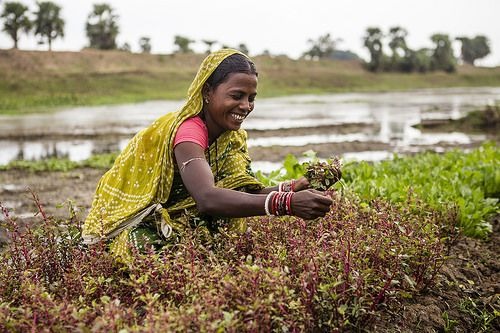
A few days ago, during a field visit, I met a woman farmer in a drought-prone village. She owned no land in her name, yet she was the one managing the farm, caring for her family, and making daily financial decisions. As we spoke, she did not talk about agriculture. She talked about uncertainty.
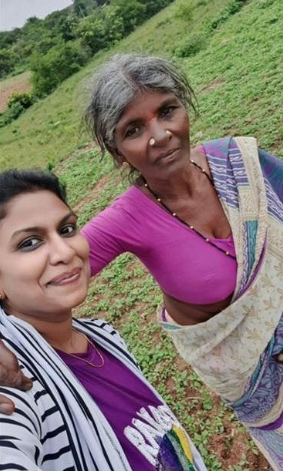
“If the rains fail,” she said, “we don’t just lose a crop. We lose school fees, medicines, and whatever little savings we have.”
What actually stayed with me was not the drought itself, but the fact that she carried most of the responsibility for her family’s resilience while having very little financial protection of her own.
Her story is not unique. It reflects a reality faced by millions of women across India and other developing economies. Women’s participation in economic activity has expanded significantly over the last two decades. More women are entrepreneurs, farmers, workers, caregivers, and financial decision-makers than ever before. Yet financial protection has not evolved at the same pace.
The numbers reinforce this reality. According to the Insurance Regulatory and Development Authority of India (IRDAI), women accounted for only 34.2% of all individual life insurance policies issued in 2022–23, approximately 9.73 million policies out of 28.4 million. In a country where women constitute nearly half the population, this gap is difficult to ignore.
The contrast becomes even sharper when viewed globally. Countries such as South Africa and Singapore have built significantly stronger insurance ecosystems, with overall insurance penetration of 11.3% and 9.2% of GDP respectively, compared with 4.0% in India. While these figures represent total insurance rather than women-specific coverage, they demonstrate what is possible when financial protection becomes an integral part of economic planning.
The result is a growing gap between the risks women face and the protection available to them.
Climate change is making that gap impossible to ignore.
According to the Food and Agriculture Organization (FAO), female-headed rural households experience 8% greater income losses from heat stress and 3% greater losses from floods than male-headed households. Across low- and middle-income countries, this translates into annual losses of approximately US$37 billion due to heat stress and US$16 billion due to flooding.
These numbers reveal an important truth: climate risk is increasingly a gendered financial
risk.
For many women, a climate event is never a single event. A drought can reduce farm income, increase household debt, disrupt children’s education, and force families to postpone healthcare. A flood can destroy productive assets, livestock, and livelihoods simultaneously. The financial consequences ripple through entire households.
Water insecurity further amplifies this burden. United Nations data shows that women and girls are responsible for water collection in 76% of households across 45 developing countries. When water sources become scarce due to climate change, women spend more time securing basic necessities, leaving less time for income generation, education, or skill development.
Women are also central to food security. Globally, they make up nearly 40% of the agricultural workforce. Yet they continue to face barriers in accessing land ownership, credit, technology, insurance, and advisory services. When climate shocks occur, recovery is often slower and more difficult.
The challenge is not simply that women lack insurance. The hidden issue is that many protection systems were designed around assumptions that do not reflect women’s lived realities.
Traditional financial products often assume stable incomes, continuous employment, and formal workforce participation. Women’s financial journeys frequently look different. Career interruptions due to caregiving responsibilities, seasonal incomes, informal employment, and unpaid household work create risk profiles that conventional solutions often fail to address.
As a result, many women remain under-protected despite being highly exposed to risk
Over the years, working in financial inclusion and microinsurance, I have met women who could clearly explain the risks they faced but had never been asked what protection they actually needed. They were not looking for complex financial products. They wanted confidence that a failed crop would not force their daughter to leave school. They wanted assurance that a medical emergency would not wipe out years of savings. They wanted
protection that reflected the realities of their lives.
This is where the conversation needs to change Insurance is often viewed as a financial product. In reality, it is resilience infrastructure. It determines how quickly individuals, families, and communities recover from adversity or financial distress.
If we want meaningful financial inclusion, we must move beyond access and focus on relevance.
That means designing protection around women’s actual risks. It means integrating climate resilience into financial inclusion strategies. It means improving financial literacy and awareness so that women can make informed protection decisions. And it means ensuring that advisory and distribution models reach women where financial decisions are truly made—within households, self-help groups, communities, and local
enterprises.
Most importantly, it requires recognizing women not merely as beneficiaries of protection but as architects of resilience.
Every day, women manage uncertainty with remarkable strength. They balance household budgets, adapt to economic shocks, support family livelihoods, and make difficult choices with limited resources. Their resilience is undeniable.
But resilience should never become an excuse for leaving women unprotected
The future of financial inclusion will not be measured simply by the number of accounts opened or policies sold. It will be measured by whether a woman facing her most difficult day has a system that stands beside her.
Climate change is redefining risk It is time we redefine protection with the same urgency.
